Isolation handover: work boundaries, locks and restart restrictions
Unfinished work continues across shifts
A maintenance handover needs to explain what the next person may do and what must remain prohibited. Progress on the job and readiness to restart the equipment are different questions. Signing for a handover does not itself transfer authority to remove locks or start the plant.
The outgoing person prepares ongoing work and restrictions; the incoming person checks the status against the same information. Separate entries for equipment identity, isolation records, unfinished work and return-to-service conditions make the handover more useful than “under maintenance”.
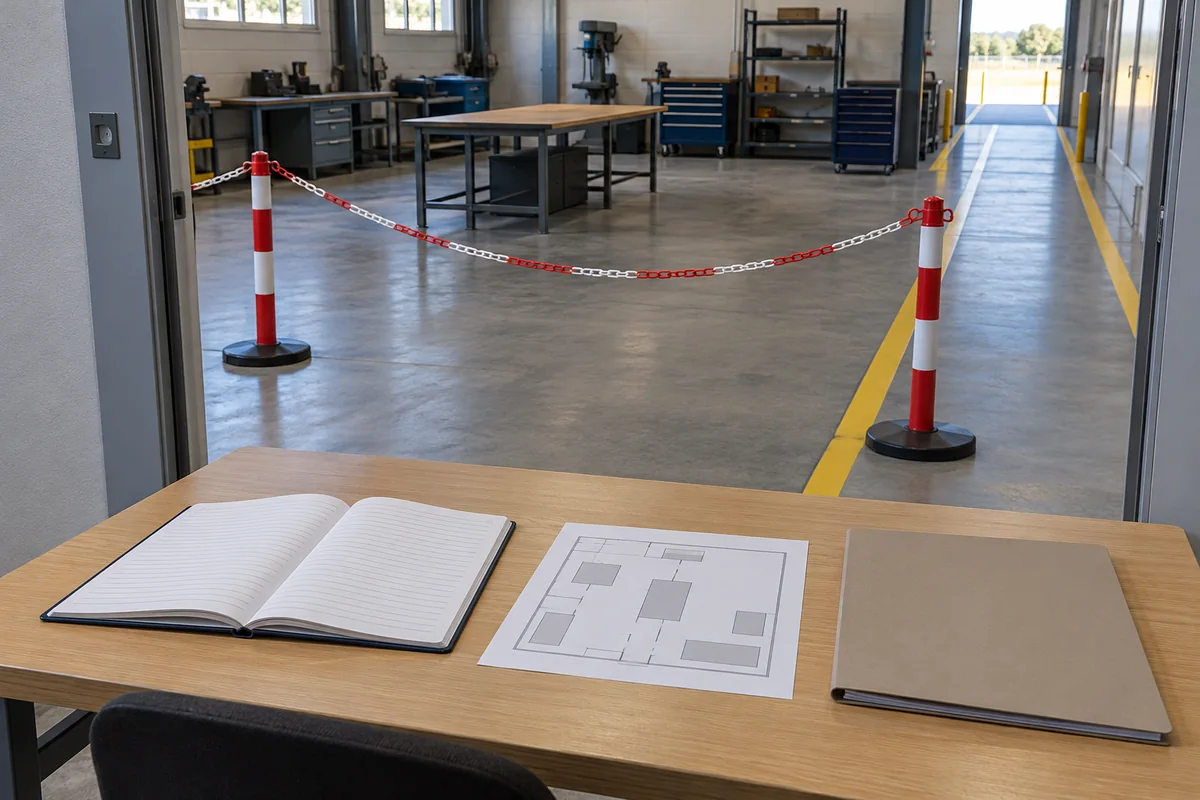
- Handover record: check that entries let the next shift find outstanding work and restrictions.
- Plan: compare the work location with the record so the handover identifies the same target.
- Work documents: keep relevant permit and isolation information available together.
- Work boundary: compare recorded restrictions with the visible boundary.
When plant status and shared knowledge diverge
Plant does not return to its normal state when the shift changes. Isolation, open equipment and temporary arrangements may continue with unfinished work, while the person who watched the work leaves. Omissions by the outgoing person and assumptions by the incoming person can create a gap between actual conditions and decisions.
HSE describes handover as preparation, information exchange and cross-checking by the incoming person. Passing over a record does not complete the last stage. Time is needed to confirm the outstanding work and whether permits and isolation records identify the same equipment.
Written and verbal communication serve different purposes. Records provide a reference for missing details; conversation helps resolve ambiguous descriptions. Skipping questions because a box is ticked, or skipping the record because something was said, leaves uncertainty for the next shift.
Stopping and protective measures across a shift change
Article 92(1) of Korea’s Rules on Occupational Safety and Health Standards requires stopping powered machinery for maintenance and similar work where workers may be endangered, with an exception where the machine’s structure removes that risk. Paragraph 2 requires protective measures against operation by others, such as locking the starting device and separately controlling its key, or installing signs.
Paragraph 3 addresses unexpected starting caused by unsuitable work methods, including appointing a work supervisor. Paragraph 4 requires additional measures, such as advance release, where compressed gas or liquid may endanger workers. Handover checks the continuing measures and outstanding restrictions.
Prepare outstanding conditions before the handover
Before the changeover, match the job reference to the equipment identity. Separate completed stages, remaining stages and restrictions that must stay in place. The record should show the state in which the next person receives the work, beyond reporting how much was done.
Link the isolation entry to the list or drawing in use and identify the revision when several versions exist. Operation of isolation points and transfer or removal of locks must follow the authorised site procedure; a handover note does not define those methods.
Give outstanding items a next action. Make clear whether an item awaits a check, requires further work or must be resolved before return to service. Marking everything “to be checked” hides priorities and restart restrictions.
Figure 3 marks visible references and boundaries.
During handover, confirm the owner of each lock.
Connect maintenance and operations handovers
Maintenance personnel know dismantling and repair progress but may not know every other permit. Operations personnel control plant status but need maintenance to identify outstanding details at the worksite. Where contractors are involved, connect their work scope to the relevant permit.
Cross-reference permits affecting the same equipment. Completion of one job may leave another job dependent on the isolation. Closing one permit therefore cannot be treated as authorisation to return the whole equipment to operation.
The incoming person restates the restrictions and next actions. Differences in understanding call for another comparison with records and field conditions. An unverified state should remain unverified, with the required check and continuing restriction identified.
Figure 2 follows the checks through to the decision.
- 1 Prepare handovergather the operating state and open items for the incoming shift to check.
- 2 Compare statecompare records with conditions in the work area to find differences in handover information.
- 3 Open workidentify unfinished work and isolations that remain in place so the next shift can distinguish continuing conditions.
- 4 Recipient cross-checkcompare the information received to find differences in understanding.
- 5 Organise recordsretain the checked state while distinguishing handover confirmation from restart authorisation.
Receiving a handover leaves a separate restart decision
Handover acceptance, maintenance completion and restart authorisation are separate decisions. Completion concerns the assigned work; return to operation considers related work and reinstatement. Handover acceptance transfers the information needed to make those decisions.
HSE permit guidance calls for a procedure to hand equipment back to operations. Checks by those authorising and performing the work may need to be linked to checks for shift changes or extensions. A shift change does not automatically extend the time or scope of a permit.
The pre-start section of KOSHA GUIDE C-C-2-2025 addresses site checks, check records and training on changed operating procedures. It also addresses restoring interlocks bypassed during commissioning when normal conditions are reached. Outstanding reinstatement needs to remain visible in the handover.
Information gaps between shifts and improvements to records
HSE links the Sellafield radioactive-liquid discharge to a failure of communication between shifts. Handover information needs to be checked so that information needed by the next shift is not omitted.
A UK refinery handover study introduced structured logs with categories including safety, maintenance and technical problems, and outstanding work. Users helped design the records and revised them after a trial. The approach focused on locating information needed by the next shift rather than multiplying blank fields.
The pilot reported more consistent recording of maintenance issues and event times, with information easier to access.

Four questions for the handover record
Equipment and scope: Do the job reference, equipment identity and current isolation records describe the same target? Align the records and revisions before comparing status.
Outstanding conditions: Are unfinished work and continuing restrictions recorded separately? The next action and the restriction pending that action should be readable together.
Related work: Does another permit or team still depend on the equipment? Check before treating one team’s completion as a reason to remove shared isolation.
Return to service: Are handover acceptance, maintenance completion and restart authorisation identified? Even where roles overlap, record which decision was made.
Field practitioner note
Lock transfer and reinstatement remain equipment-specific
Handover records communicate outstanding work and restrictions. They do not prescribe isolation methods for electrical, pressure or gravitational energy, or the removal of another person’s lock. Follow the authorised procedure and authority for the particular work.
The discussion of C-C-2-2025 uses the 2025 technical guidance. HSE handover and permit documents are UK guidance. They are distinct from Korean statutory duties applicable to a site, and a handover alone does not establish completion of all required precautions or training.