English names and summaries of Korean laws are unofficial translations. The Korean text on the Korean Law Information Center (law.go.kr) prevails.
Inspect roof supports, not just the surface: dismantling a storage-building roof
Key terms in Korean and English
- serious accident (중대재해, OSH Act)
- fall from height (떨어짐)
- safety net (추락방호망)
- sandwich roof panel (지붕 패널)
At a glance
On 20 May 2022, a worker dismantling a storage-building roof in Ulsan fell while standing on the roof.
The worker died during treatment on 29 May 2022.
From preparation to the aftermath
Existing buildings were being demolished for a new facility. The demolition period was short, and a worker left on the first day. A replacement joined the following day. After working on a wall, that worker was assigned to remove sealant from a small storage building's roof at the rear.
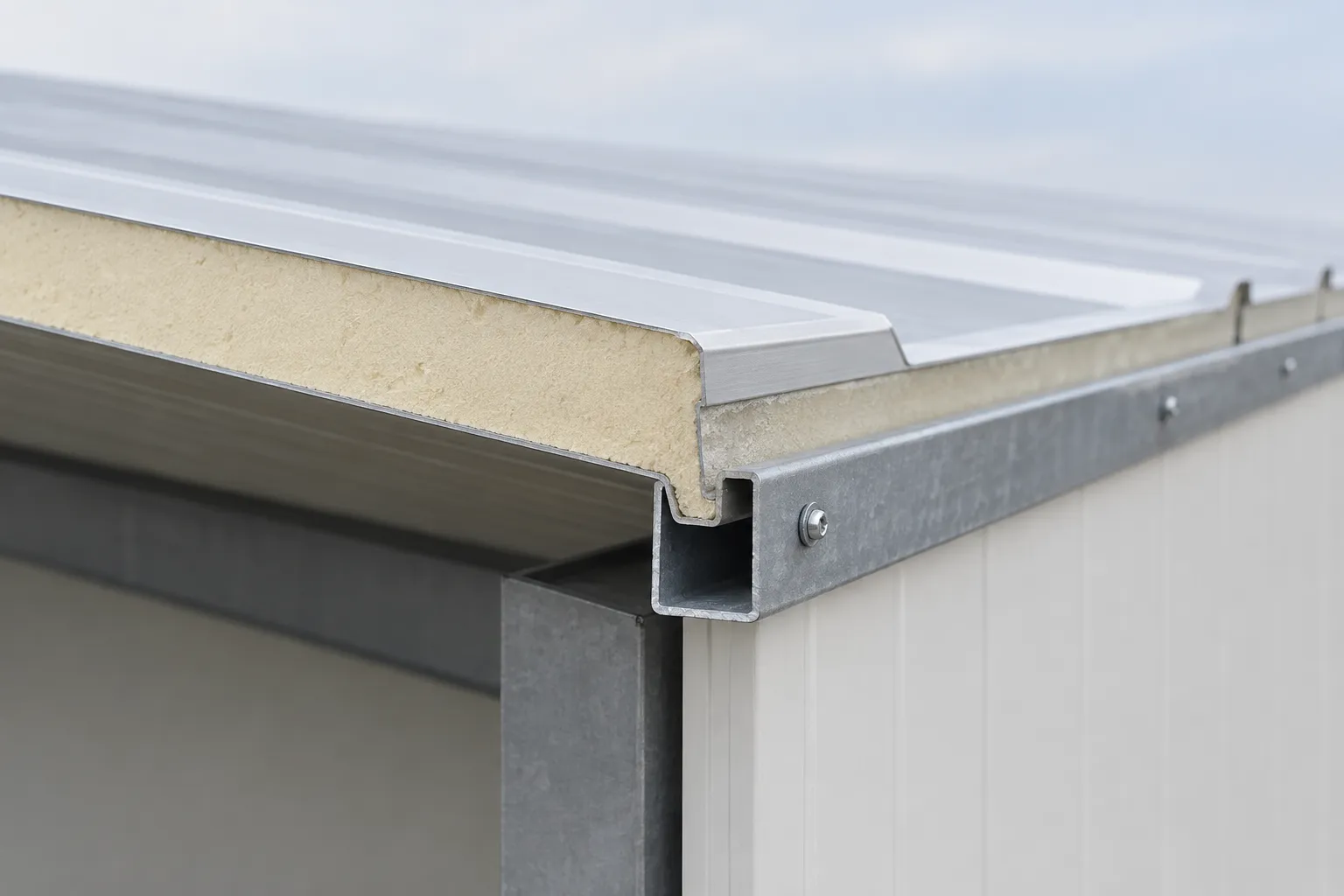
The storage building was about 3 m high and had a sandwich roof panel covering. Sealant between panels had to be cut away before dismantling could continue. The worker climbed a ladder. The roof surface did not look badly broken or sagging.
Two people were assigned to the task, but the other worker was occupied inside the building. The roof worker removed sealant alone. U-shaped steel edging supported the panels and was fixed with screws. No additional support had been installed below.
On 20 May 2022, the fixing supporting the occupied panel could not carry the load. Screws pulled out and the U-shaped edging deformed, allowing the panel and worker to fall together. The fallen panel retained its shape: the failure was not a hole broken through the panel itself.
The worker wore a helmet and harness but had no anchorage. After losing consciousness in the fall, the worker was taken to hospital and died during treatment on 29 May. Issuing protective equipment had not created a functioning fall-arrest system.
An intact panel can fall when its fixings fail
Looking only at the sandwich panel surface does not establish whether the roof can support a person. Load must pass through the panel, its supports and fixings into the building. Here the fixing failed before the panel. A sound-looking sheet is not evidence of a sound load path.
Dismantling progressively alters the load path. Removing edging or fixings changes what the remaining parts must carry. A plan must identify both what is removed and what supports the remaining panel immediately afterwards. A board placed on the same panel cannot restore the capacity of its failed fixing.
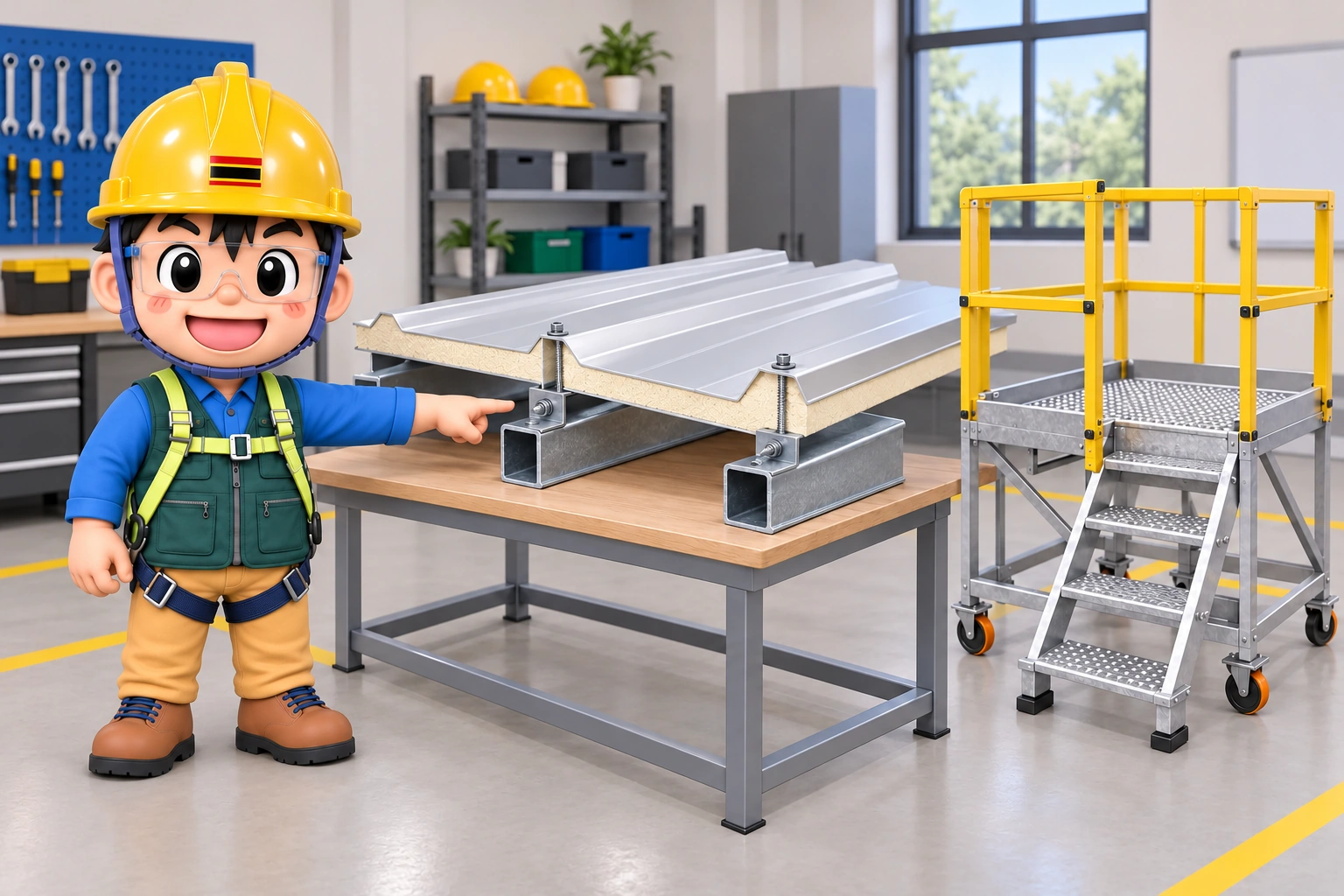
The white paper discusses independent supports below the roof, safety nets and harness anchorages. Supports address structural failure; nets and an attached harness protect the person if a fall occurs. Their functions must be planned around available space and the dismantling sequence.
Consider whether walking across successive panels is necessary at all. A position independent of the roof avoids adding the person's load to uncertain fixings. If that is impracticable, the dismantling plan needs the reason and the alternative support and protection arrangements. Familiarity is not a basis for choosing the access route.
The small task involved dismantling 4 roof panels. Even on a small job, failure of the fixing supporting one occupied panel can bring the person down with it. Surveying the entire roof must therefore include the edges and screws of the particular panel used as a foothold. A newly assigned worker also needs the survey findings and no-step areas.
A paired-work designation does not describe actual positions. If one person is above and the other inside the building, consider visibility and whether a falling panel exposes the person below. Before simply adding a partner, decide whether the upper and lower tasks should occur simultaneously.
A structure scheduled for demolition still needs protection while people work on it. Omitting an anchorage because it must later be removed leaves workers unattached through the final roof-removal stage. Choose the method by continuity of protection throughout the job rather than the inconvenience of installation and removal.
What the comparison shows
The same white paper describes falls through skylight and slate roofs in April 2022. Those workers stepped onto fragile material that broke. At this storage building, the edge fixing failed instead. Both used the roof as a working surface, but the points of failure differed.
Even a walkway avoiding fragile sheets needs sound support at its ends. A cover resting only on other weak panels leaves the support problem unresolved. The useful comparison concerns how the person's load reaches the building, not simply the name of the roofing material.
Causes and protective layers
| Layer | At the time | Workplace action |
|---|---|---|
| Prior survey | Panel fixings and structure not adequately examined | Identify the role of edging, screws and supports |
| Dismantling sequence | No planned sequence | Plan remaining support and temporary support panel by panel |
| Fall arrest | No anchorage or safety net | Provide fall protection suited to the position |
| Paired work | Partner working elsewhere | Define positions and the scope of mutual checking beforehand |
Investigation and proceedings
The contractor’s representative received 10 months’ imprisonment, suspended for 2 years. The same contractor had received a criminal fine of KRW 1.5 million in 2020 for failing to provide fall prevention measures.
Why the consequences were severe
The small roof was about 3 m high. A higher roof had been dismantled the previous day, but this lower roof still presented a fall hazard. When the fixing failed, the whole standing surface moved, and the unattached harness offered no arrest. Relative height did not remove the danger.
Wall removal depended on dismantling the roof first. Delay to the roof therefore held up subsequent tasks. Unless support and anchorage installation and removal are included in the schedule, protection can be treated as an additional burden. Those tasks belong in the demolition programme from the start.
Questions at the work position
| Question | What to examine |
|---|---|
| What transfers the panel load into the building? | Examine edging, screws and surrounding structure separately |
| What supports the panel after a fixing is released? | Show temporary supports for each dismantling stage |
| Is the platform supported independently of what is being removed? | Check both ends and their fixings |
| Is the anchorage itself scheduled for removal? | Compare its supporting member with the dismantling sequence |
Korean legal references
Rules Article 45 addresses roof edges, skylights and weak roofing materials. Article 44 requires anchorages and inspection when harnesses are used where a fall risk exists at a height of 2 m or more. A sound-looking panel can remain dangerous if its fixings are weak, so both material and support need assessment.
Assessment under OSH Act Article 36 should address the changing structure and the worker's route during demolition. Current rules are linked for workplace checks; the criminal outcome is limited to the sentence recorded in the white paper.
Occupational Safety and Health Act (Korean) · Rules on Occupational Safety and Health Standards (Korean)
Sources
MOEL and KOSHA, 2023 Serious Accident White Paper, 276–307 pages. Official publication (Korean)