English names and summaries of Korean laws are unofficial translations. The Korean text on the Korean Law Information Center (law.go.kr) prevails.
Were defective batteries separated from escape routes?: A primary-battery factory fire
Key terms in Korean and English
- serious accident (중대재해, OSH Act)
- risk assessment (위험성평가)
- fire (화재)
At a glance
On 24 June 2024, a fire at a primary-battery factory in Gyeonggi Province killed 23 people and injured 9.
Batteries were stored in the work area as fire spread, and some escape routes were difficult for workers to use.
From preparation to the aftermath
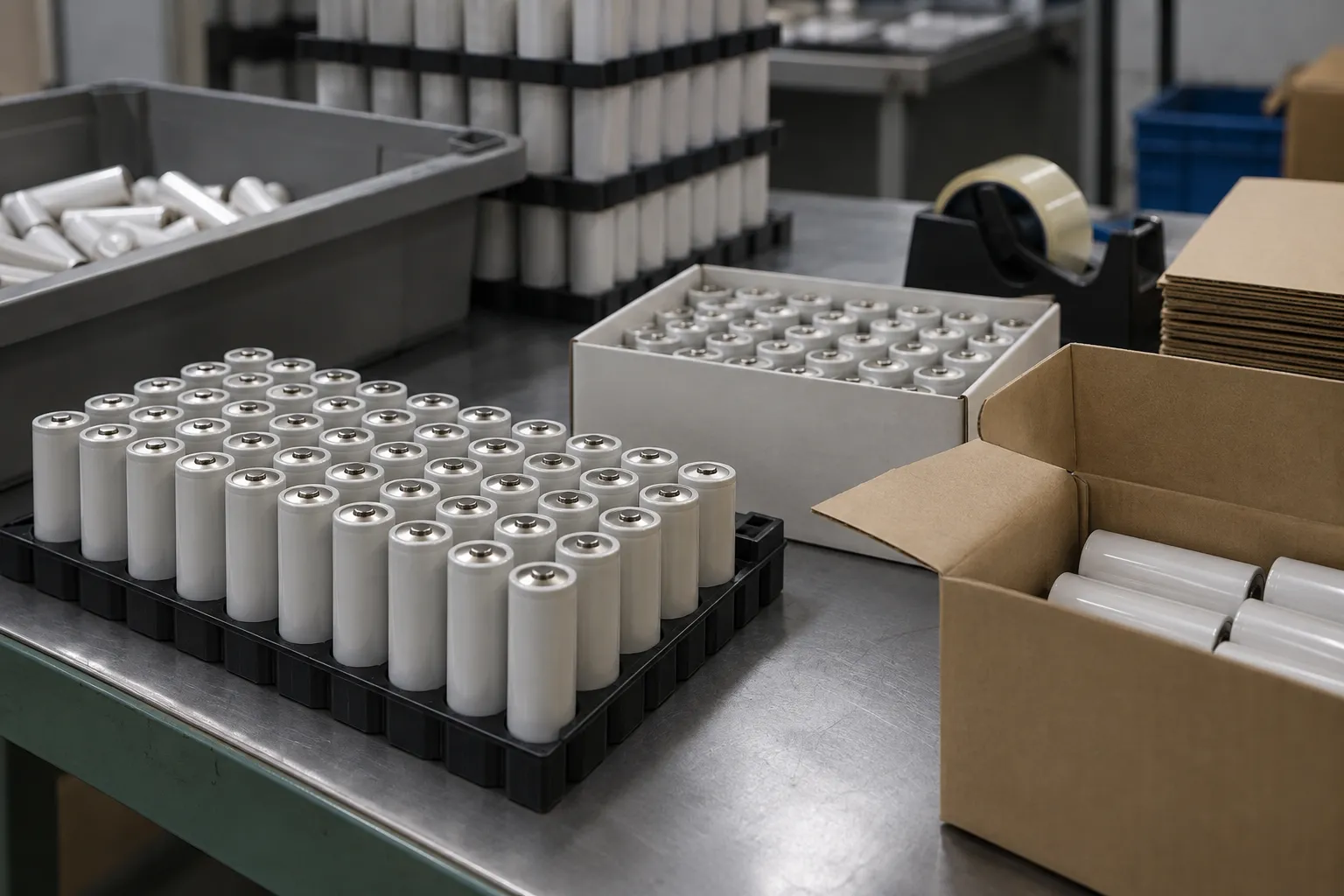
On the morning of 24 June 2024, workers were inspecting and packing products on a battery factory’s second floor. Many batteries were gathered in the work area, where 42 people were working. At about 10:30, flame and smoke appeared near the batteries and quickly spread through the work area.
The white paper describes heavy smoke developing about 40 seconds after ignition. Workers brought extinguishers, but could not stop successive battery ignition and spreading smoke. Fire obstructed the route workers normally used.
Other routes to the stairs were not readily usable. Partitions and door arrangements meant that one route passed through the burning area, while an alternative door had restricted access authentication. For temporary workers who did not normally use it, a visible door was not an immediately available exit.
The fire killed 23 people and injured 9. Agencies carried out a joint forensic examination on 25 June. The white paper examines earlier fires, production management, risk assessment and escape arrangements as well as the spread after ignition.
Fires had occurred during battery handling before this incident. The white paper lists fires in November and December 2021, a waste-battery fire in March 2022 and another fire on 22 June 2024, two days before the fatal event. Earlier ignition had not led to adequate interruption of work and renewed examination of the hazards.
Quality problems and delivery pressure preceded the accident. Inexperienced workers were assigned, and defective batteries were subjected to impact or welding. Fire hazards were missing from the risk assessment, and the investigation identified management that amounted to changing the date on an earlier assessment.
Sequential battery ignition and routes for people to escape
In a workplace holding many batteries, the initial ignition point does not define the full danger zone. Heat transfer and successive ignition can turn a small area around inspection or packing into an evacuation problem for many people. Map the locations of awaiting-inspection stock, finished products and defective units as well as production equipment.
Inspection and packing may appear less hazardous because manufacture is complete. Yet units in different conditions can meet in inspection, and products can accumulate while awaiting further work or dispatch. Examine simultaneous growth in occupancy and stock, and provide a way to segregate defective units.
Partitions may compartmentalize fire or obstruct movement. Two visible doors do not necessarily provide two independent escape routes. If both pass through the same potential fire area, or only some workers can open one door, the practical choices are fewer. Walk the route from work positions whenever storage or partitions change.
Access control needs review for both ordinary security and emergency escape. A familiar door for permanent staff may be inaccessible to a temporary worker. Everyone occupying the space that day must be able to reach safety. Finding a person with authorization cannot be left as a problem to solve during evacuation.
Rapid smoke development leaves less time to read instructions and find an exit. Training should include finding the actual route from the work position, not just showing an exit diagram. Include loss of the usual arrival route. For workers using another language, verify understanding of the alarm and required action rather than merely recording delivery of instructions.
Workers should not be left to deliberate for long between firefighting and escape. Where batteries ignite successively and smoke spreads quickly, getting people out while routes remain available is critical. Prepare battery-specific firefighting through advance planning and professional response rather than leaving ordinary workers to resolve an escalating fire.
A fire that was extinguished does not establish that work can safely continue. Follow through on segregation of affected and nearby products, remaining conditions and responsibility for checking before restart. Keeping the assessment and method unchanged under production pressure leaves the warning from an earlier fire unaddressed.
Management needs a coordinated sequence for stopping work in the alarmed building and evacuating nearby areas. The white paper also describes continued work in an adjacent building after an initial alarm. Waiting to see or smell smoke loses warning time. Alarm actions, assembly and accounting need continuity across shifts and employers.
Compare escape lines on the plan with actual doors. Walk routes from inspection, around partitions, past packing and through doors before the stairs. The conditions can differ despite identical exit signs. Include stock encroachment and closed doors; an empty-factory walkthrough does not establish operating conditions.
Quality information needs to connect with fire-risk management. Units segregated for leakage, heating or deformation can create a distinct hazardous task unless their location and handling method are defined. Inspection designed only to identify saleable products quickly can overlook risks to people touching or moving abnormal units.
The comparison facility’s metal containers and separate areas show that stock arrangement itself is a design matter. A different container alone does not establish ignition prevention or complete heat containment. Assess product characteristics, quantities, compartmentation and escape alongside equipment performance and operating conditions.
What the comparison shows
The same white paper describes another battery manufacturer that reorganized production after an earlier fire. It separated battery storage and observation space, used concrete compartmentation and metal storage containers, and improved escape routes and markings. The comparison concerns addressing stock accumulation and people’s movement together.
Adapt measures to the product, storage process and building rather than copying another facility. Check whether dividing battery storage also improves access to exits. If added compartmentation restricts who can open doors or lengthens escape routes, revise the evacuation arrangement.
After a 2017 fire, the comparison facility separated ageing space from other operations when it restarted in 2018. This addressed the concentration of products being held for observation. Separating packing positions from potentially heating stock also allows distinct review of observation and ordinary-work routes.
Its changes included escape guidance and routes in multiple directions. Unlike changing containers alone, this addressed where workers could move during fire. For the present layout, ask not how many exits are counted, but whether each inspection and packing position retains a door reachable without crossing the burning area.
Causes and protective layers
| Layer | At the time | Workplace action |
|---|---|---|
| Product management | Defective-product handling and earlier fires | Check segregation, stoppage and restart conditions |
| Escape | Partitions, fire and restricted doors | Independent routes usable by all occupants |
| Alarm response | Work continued after an alarm | Verify the action required on alarm |
| Assessment | Reused document and omitted fire risk | Reflect changes in products, stock and people |
Investigation and proceedings
A joint forensic examination began on 25 June 2024. Court outcomes are not recorded in the chapter describing this accident.
Why the consequences were severe
Rapid fire spread coincided with shrinking escape choices. Reducing concentrations of products and people, separating potential fire areas and providing escape without access-authentication barriers need to work together. Training cannot open an obstructed route, and extra exits alone do not change continued work after an alarm.
Questions at the work position
| Question | What to examine |
|---|---|
| Can a newcomer open the door? | Authentication, locks, partitions and actual routes |
| Where do defective units collect? | Separation of inspection, storage and dispatch stock |
| What changed after earlier ignition? | Stoppage, restart checks and assessment |
| Where is the alternative to the usual exit? | Independence and usability of the other route |
Korean legal references
Risk assessment under Occupational Safety and Health Act Article 36 should address products, stock, occupancy and abnormal work. Safety-rule Article 17 governs emergency exits for workplaces and buildings within its scope. Check the actual building use and materials, and reconcile access control with escape.
Occupational Safety and Health Act (Korean) · Rules on Occupational Safety and Health Standards (Korean)
Sources
MOEL and KOSHA, 2025 Serious Accident White Paper, Part 1, 10–41 pages. Official publication (Korean)