Safe work
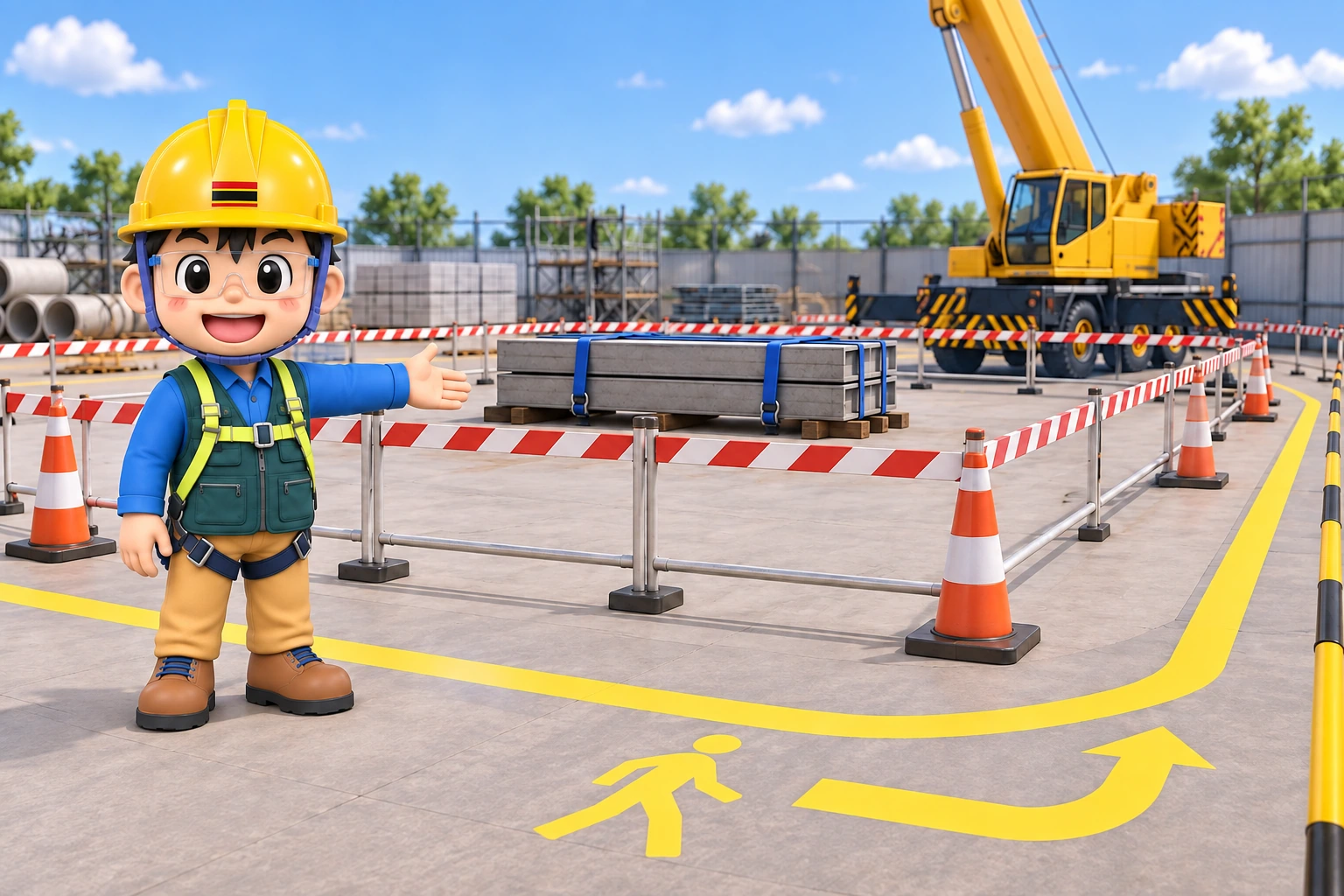
Lifting exclusion zones: load routes, pedestrians and stop conditions
HSE connects lift planning, supervision and safe execution. The exclusion zone is not just the landing point.
Read more →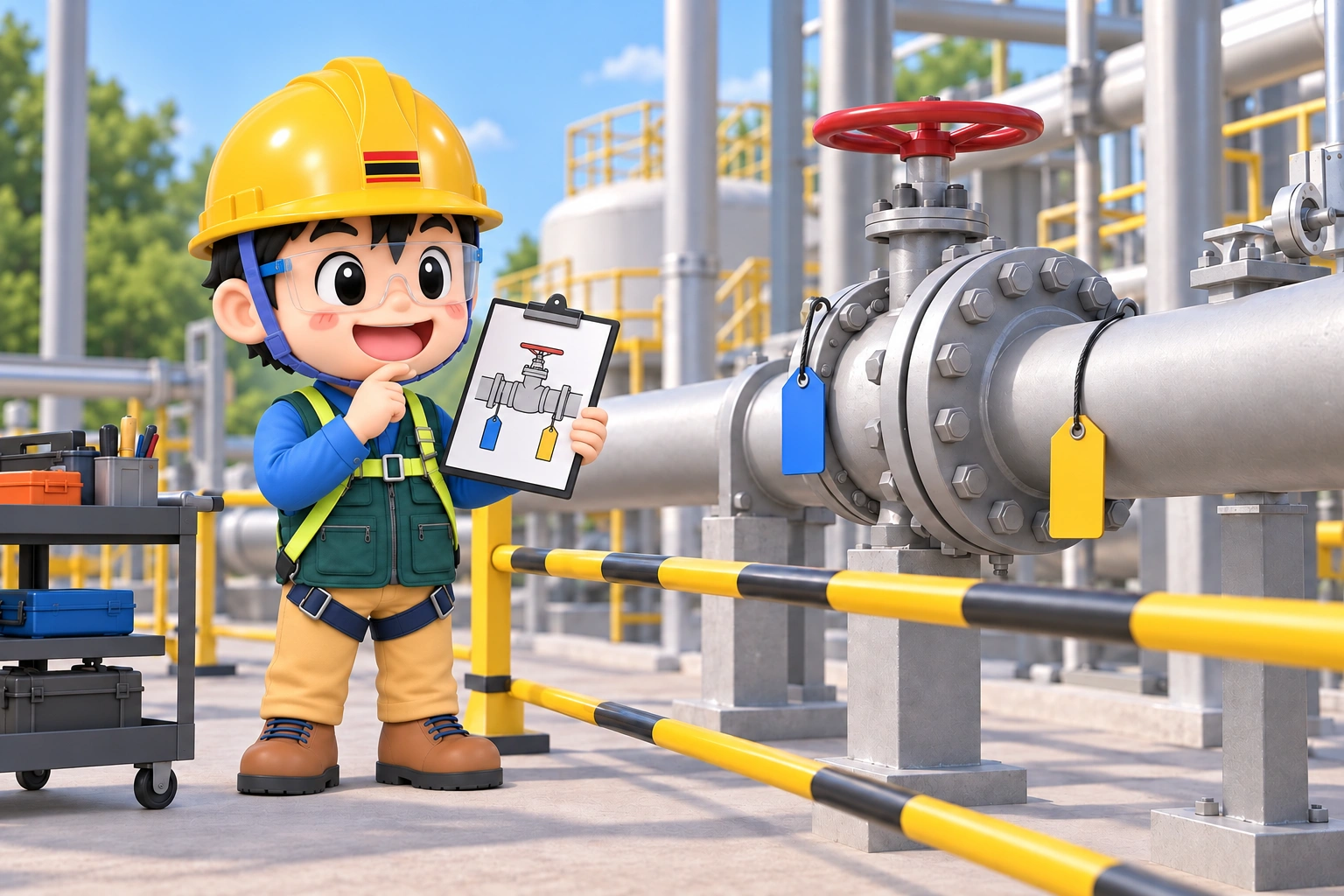
Line breaking: identify the pipe, isolate energy and verify conditions
HSE maintenance guidance addresses isolation and stored energy. Confirm equipment identity before breaking containment.
Read more →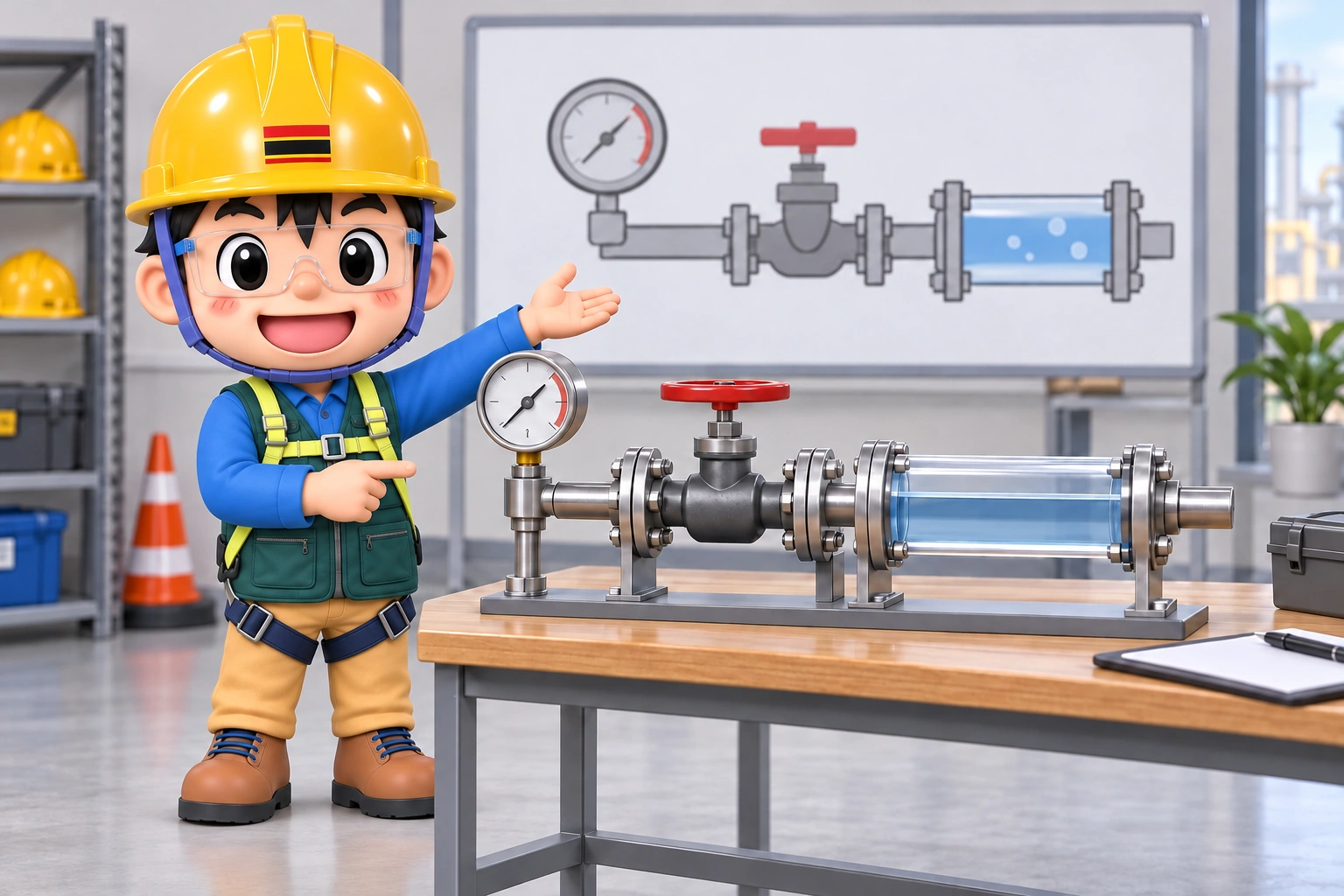
Residual pressure and trapped contents: checks before maintenance
HSE isolation guidance addresses draining, isolation and changing process conditions. Operating a drain is not proof that residual hazards are gone.
Read more →
Permit-to-work changes: suspend, reassess and authorise restart
HSE describes permits as a control and communication system. A signature does not authorise changed conditions.
Read more →
Confined-space entry checks: testing, isolation, ventilation and rescue
A reading alone is not entry authorisation. Korean MOEL emphasises pre-entry checks; UK HSE also addresses avoiding entry and preparing rescue.
Read more →
Safety meeting records: actions, owners, deadlines and verification
Safety communication must be usable by the next person. HSE handover principles can inform follow-up after a meeting.
Read more →
Simultaneous operations: assess overlapping tasks, times and work areas
Assess interactions as well as individual task hazards. Review overlapping work and coordinate timing, areas and equipment use.
Read more →
Plant shutdown safety: temporary systems and restart checks
HSE chemical-plant permit guidance considers isolation, draining, flushing, risk assessment and communication together.
Read more →
Isolation handover: work boundaries, locks and restart restrictions
HSE highlights preparation, information exchange and cross-checking by the incoming shift. ‘Under maintenance’ is insufficient isolation detail.
Read more →
Toolbox talks: check changed conditions and stop-work triggers
A toolbox meeting connects today’s task and changed conditions to the precautions workers need to understand.
Read more →
Scaffold pre-use checks: access, platforms, guardrails and alterations
HSE guidance addresses scaffold suitability and inspection. A remaining tag does not prove that changed conditions are safe.
Read more →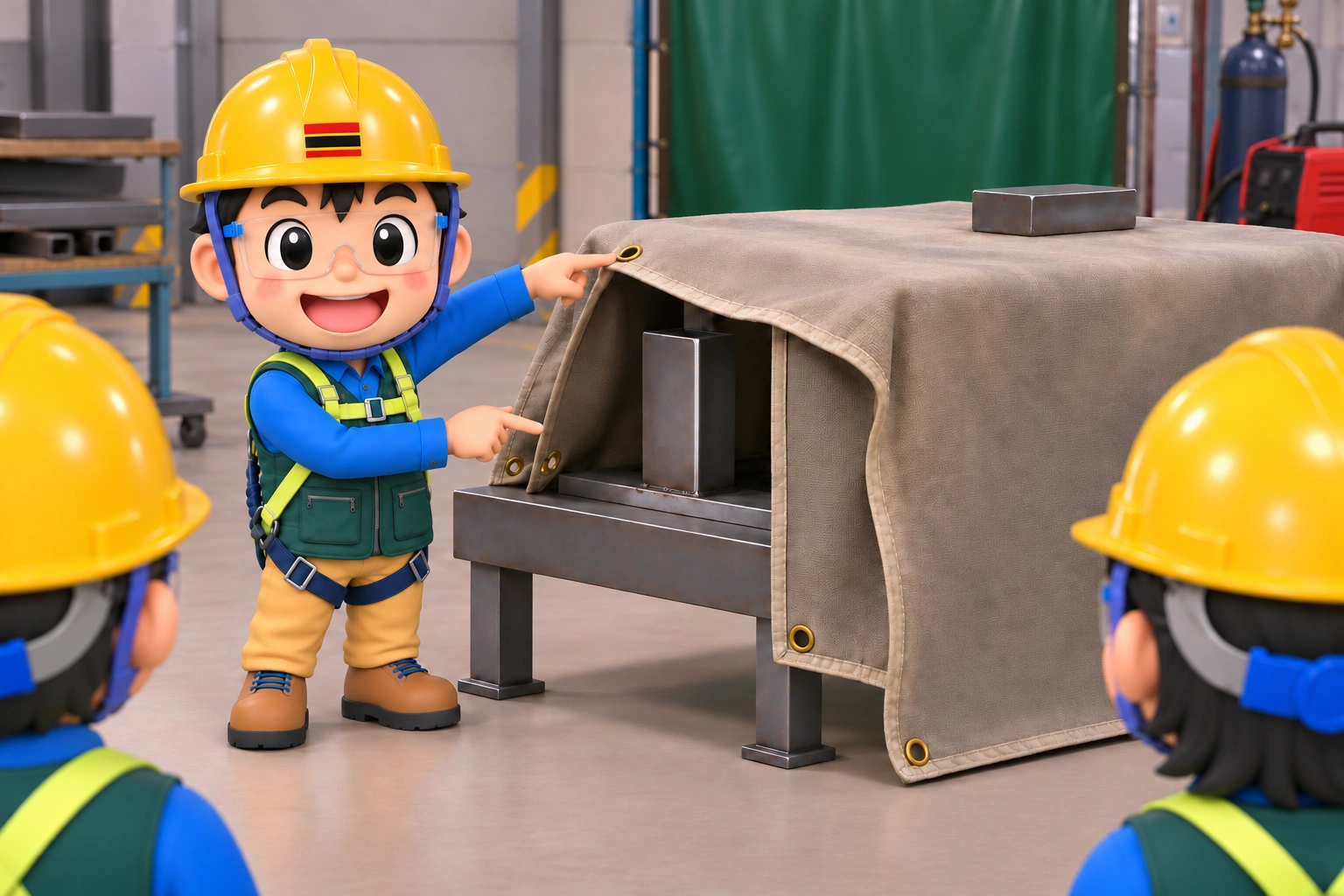
Welding blankets: spark containment, certification and limitations
Korean rule 241 addresses several controls beyond covering combustibles. A blanket does not replace the whole control system.
Read more →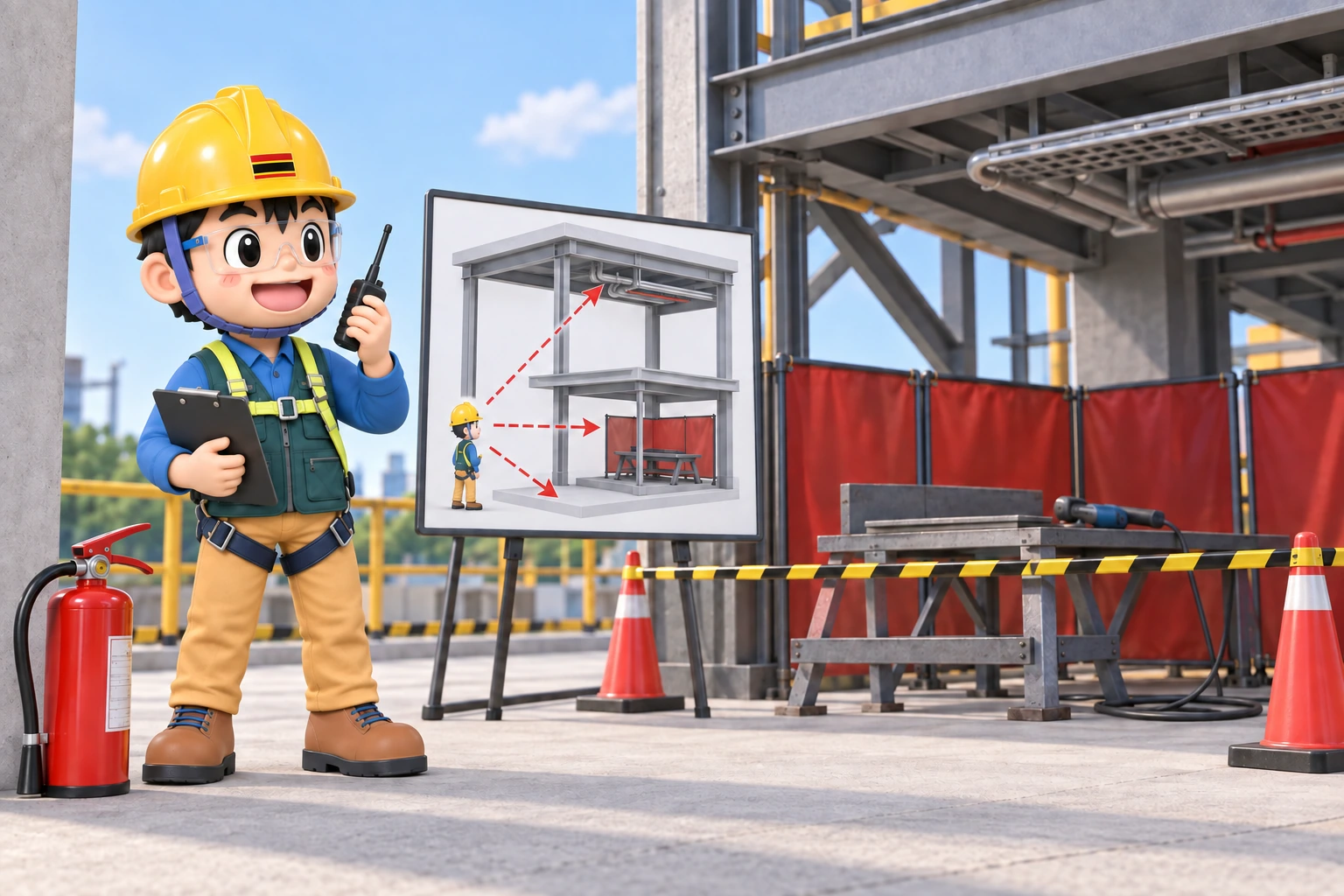
Hot-work fire watch: coverage, blind spots and Korean requirements
Korean rule 241-2 distinguishes location triggers, fire-watch duties and equipment. A named person does not by itself provide coverage.
Read more →
Reporting a stop-work concern: observations, withdrawal and restart
Korean OSH Act article 52 addresses imminent-danger withdrawal, prompt reporting and action, with conditions for protection against adverse treatment. It is Korean law.
Read more →
Stopped is not the same as isolated
Understand stopping, prevention of restart and residual energy.
Read more →
Before hot work: look beyond the work point
Check spaces that sparks or transferred heat could reach.
Read more →